
 Oct 2, 2026
 4 min read


Custom Packaging for Pillow Brands: What to Plan
For a pillow brand, packaging does three jobs at once. It protects the product, it sells the brand and it carries the information buyers and regulators expect. Planning it early avoids delays, because packaging is often the slowest part of a private label order. Settle your pack type, labels and artwork while the pillow itself is still being approved, and the rest of the order moves much faster.
Choose the Right Pack Type
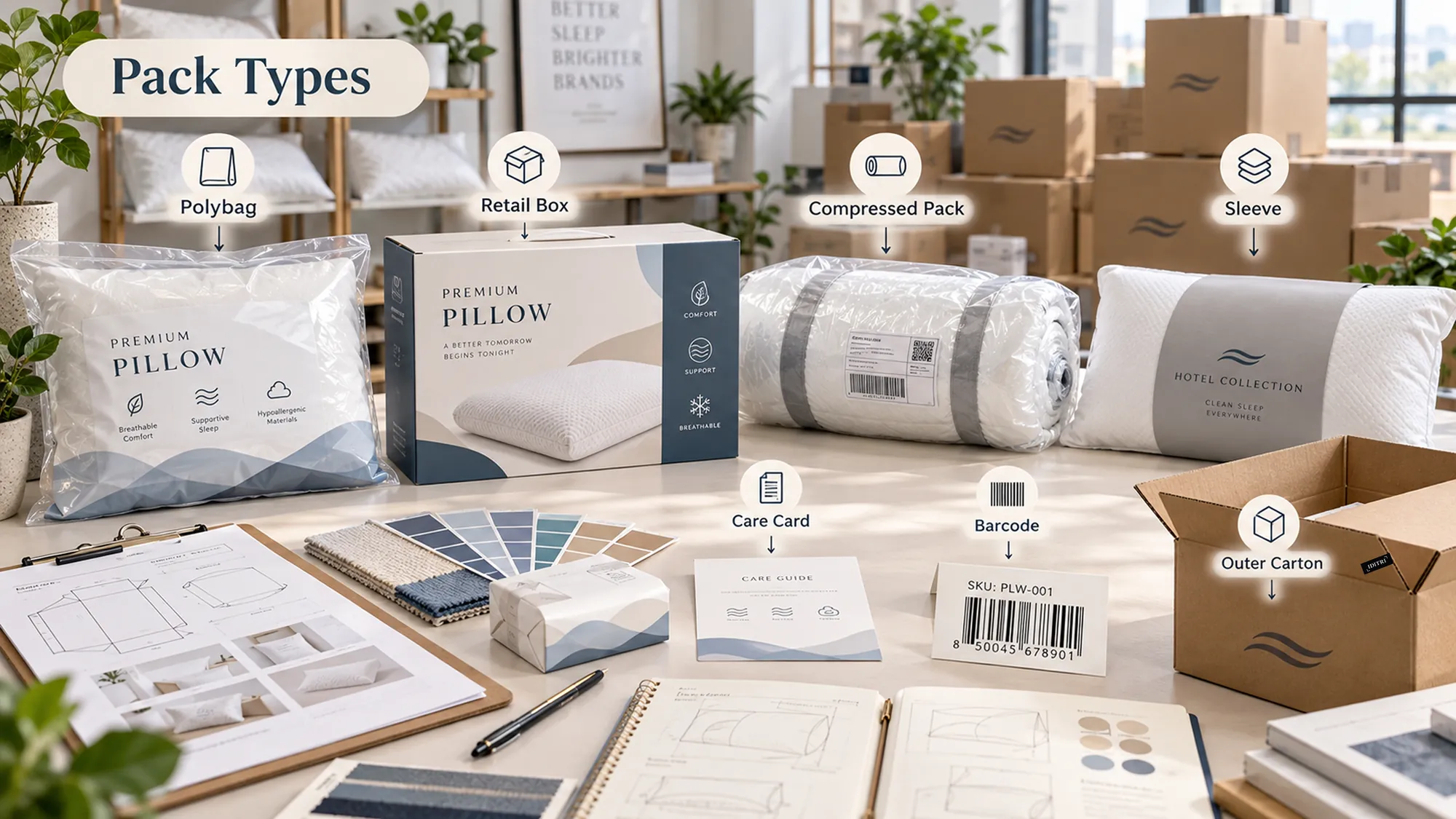
The best pack depends on where you sell. Compare the common options before you brief your manufacturer.
| Pack type | Best for | Consider |
|---|---|---|
| Printed polybag with label | Marketplace sellers and cost-focused launches | Lower cost, but less shelf appeal |
| Printed retail box | Stores, gifting and premium positioning | Higher cost and often a higher MOQ |
| Compressed pack | Efficient shipping and storage | Check how the foam recovers after unpacking |
| Plain wrap or sleeve | Hotels and institutions | Minimal branding, easy to store |
Think about the unboxing moment too. A pillow that arrives neatly packed, with a clean label and care card, feels more premium than one tossed into a bag. Small details like these shape reviews and repeat purchases.
Information Every Pack Should Carry
Requirements vary by market and sales channel, so confirm the rules that apply to you. As a starting point, most packs include:
- brand name, logo and product name
- size, material and cover fabric
- care and cleaning instructions
- manufacturer or marketer details and country of origin
- barcode or SKU for scanning and inventory
If you sell in India, check the labelling rules for packaged goods. If you export, check the requirements of the destination country as well. When in doubt, ask before you print.
How Packaging Affects Cost and Lead Time
Printed materials are produced separately from the pillow, so they must be approved early. Printers set minimum print runs, which can push your MOQ up. Every proof revision adds days before production can start. Premium boxes and special finishes cost more, and strong export cartons protect goods but add weight and freight cost. Tell your supplier the pack type, quantity and channel at the start, not after the pillow is approved.
Design for the Buyer in Front of You
One design rarely suits every customer. Marketplace sellers need protection, scannable barcodes and labels that read clearly as a small thumbnail. Retailers need shelf-ready packs with clear branding and easy-to-read features. Hotels and institutions prefer simple, bulk-friendly packing. Export buyers need strong cartons, accurate markings and complete documents. Whichever pack you choose, remember the outer carton too, since it is what couriers and warehouse staff actually handle.
Review a Physical Sample
Digital mock-ups never match a real pack. Ask for a physical sample of the printed packaging with a pillow inside, check colours in daylight, and confirm that it closes, stacks and ships well. Send vector artwork with fonts converted to outlines and a clear dieline, and approve the proof carefully. Spelling mistakes and wrong sizes are easy to miss and expensive to fix after printing. Keep a signed-off copy of the approved artwork and specification, so every reorder matches the first one exactly.
Sustainability Is Part of the Brief
Buyers increasingly notice excess plastic. Where it suits your product, consider recyclable materials, right-sized packs and clear recycling symbols. Less packaging can also lower freight cost, so the sustainable choice is often the commercial one as well.
Common Packaging Mistakes
The most expensive packaging errors are avoidable. Printing before the pillow specification is final means reprinting if the size changes. Forgetting barcode space forces stickers over your artwork. Choosing a box that does not fit the compressed pillow leads to damage in transit. And approving a digital proof without checking colours on a physical sample often ends in disappointment when the printed pack looks darker than expected. Ask your manufacturer for a dieline early, because pack size depends on the pillow’s compressed dimensions.
“Packaging is the first thing your customer touches. Make it protect, inform and impress.”
Plan Packaging With Your Manufacturer
We support custom branding and packaging on our private label programme, and you can see our wider wholesale options too. When you are ready, request a quote with your artwork and specification. Related reading: how to start a private label pillow brand.