

 Oct 3, 2026
 4 min read


How to Evaluate Memory Foam Quality Before Bulk Buying
Two memory foam pillows can look identical on a shelf and feel completely different after three months of use. For buyers ordering in bulk, judging foam quality is a practical skill, and you do not need a laboratory to start. This guide covers the properties that matter and the simple checks that reveal them.
The Four Properties That Matter
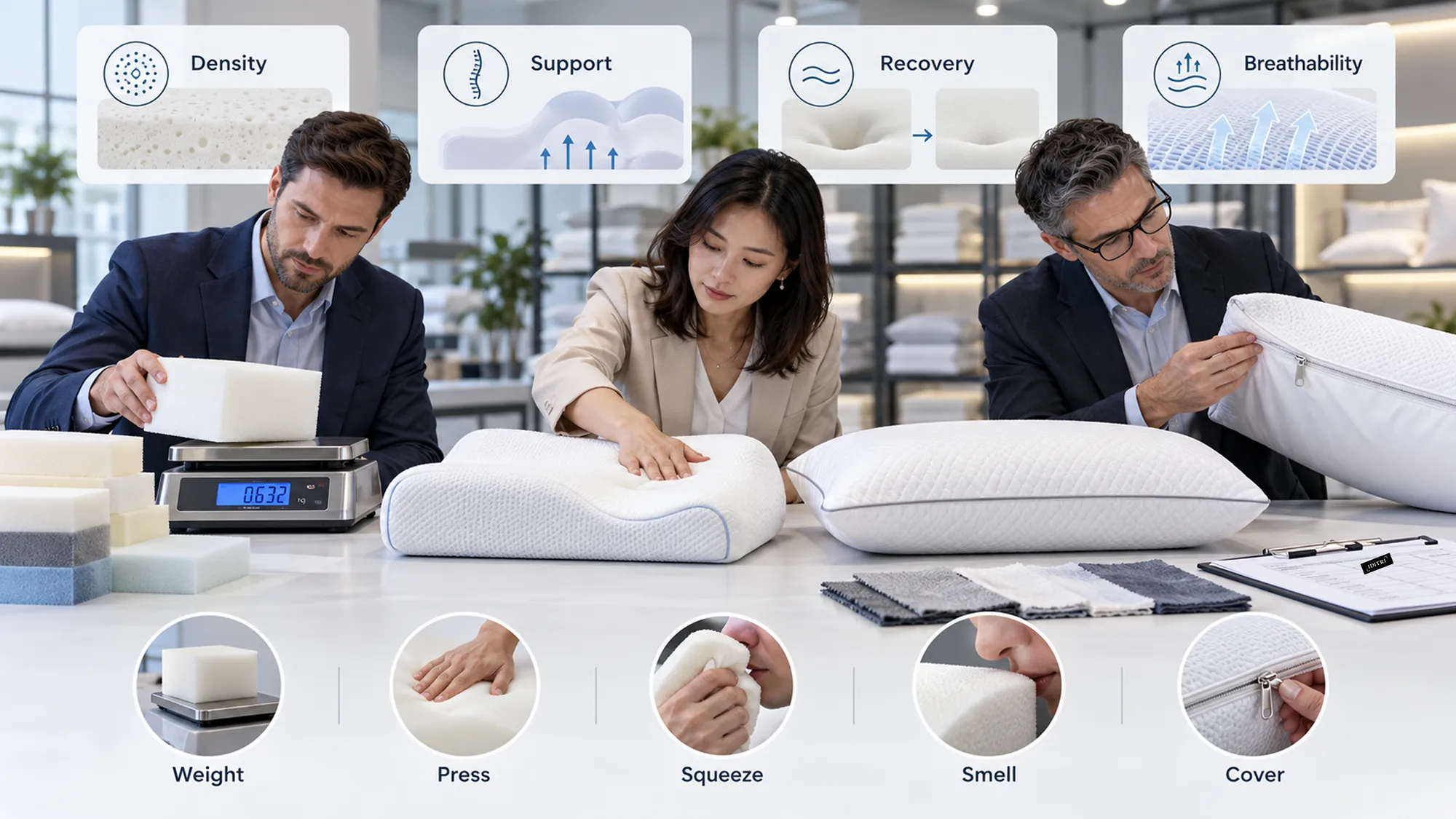
Density describes how much foam is packed into a given volume, and it is the strongest clue to durability. It is usually measured in kilograms per cubic metre. Higher-density foam is generally more durable and supportive, but also heavier and more expensive. Support is how strongly the foam resists pressure. Recovery speed is how quickly it returns to shape after you press it, and quality memory foam recovers slowly and evenly. Breathability is how well air moves through the foam and cover, which affects comfort in warm climates. Every one of these properties can be felt in a sample, which is why hands-on testing remains the quickest first filter.
The right balance depends on the product. A hotel pillow, a contour pillow and a cervical pillow each do a different job, so judge the foam against its purpose rather than chasing a single “best” number.
Five Hands-On Tests, in Order
Run these checks on every sample, and repeat them on a pillow taken from the first production batch:
- The weight test. Weigh two samples of the same size. A large gap often signals a difference in foam density.
- The press test. Push your hand into the foam and release. It should recover slowly and evenly, without leaving a permanent mark.
- The squeeze test. Compress the pillow and let go. It should regain its shape without large creases or hard spots.
- The smell test. A faint odour fades within days. A harsh smell may point to poor curing.
- The cover test. Check seams, zip and fabric feel, since covers often wear out before the foam does.
Know the Warning Signs
A pillow that flattens quickly usually points to low-density or poor-quality foam. Lumps or hard spots suggest uneven cutting or pouring. A cover that shifts or tears means weak seams or unsuitable fabric. And an uneven shape across a lot suggests inconsistent cutting. Each of these is easy to spot early and costly to fix after shipment.
Why Cover Quality Matters
Foam gets the attention, but the cover decides how a pillow feels against the skin and how long it looks good. A removable, washable cover is easier to maintain and reduces complaints, especially in hotels and warm climates where pillows are used heavily. Check fabric softness, stitch quality and zip strength on every sample.
Temperature and Feel
Memory foam is temperature-sensitive, so a pillow can feel firmer in a cold showroom and softer in a warm room. Test samples at the temperature where your customers will use them, and take this into account when you describe firmness online.
Ask for Evidence, Not Promises
Request the supplier’s material information and any test details for the foam used in your order. If a manufacturer claims a specific standard or certification, ask for the document and confirm that it covers the exact product you are buying. Never rely on claims you cannot verify. A transparent supplier will also explain how foam is cured and aired, and how density and size are checked between batches.
“Good foam is easy to feel and hard to fake. Test the sample, then test the production batch.”
Match the Foam to the Product
Cervical pillows rely on dependable, shaped support, so firmness and recovery matter most. Contour pillows depend on a consistent curve, so check that the shape holds after repeated use. Hotel pillows must stay comfortable and uniform across hundreds of beds. Whichever product you choose, write the density and firmness targets into your purchase order, so later batches are measured against the same standard.
Choose a Manufacturer That Shares Specifications
A transparent supplier will tell you what foam is used, how it is checked and how batches stay consistent. Learn more about our approach on the manufacturing page, see what quality control should look like, or request a quote and ask for samples.